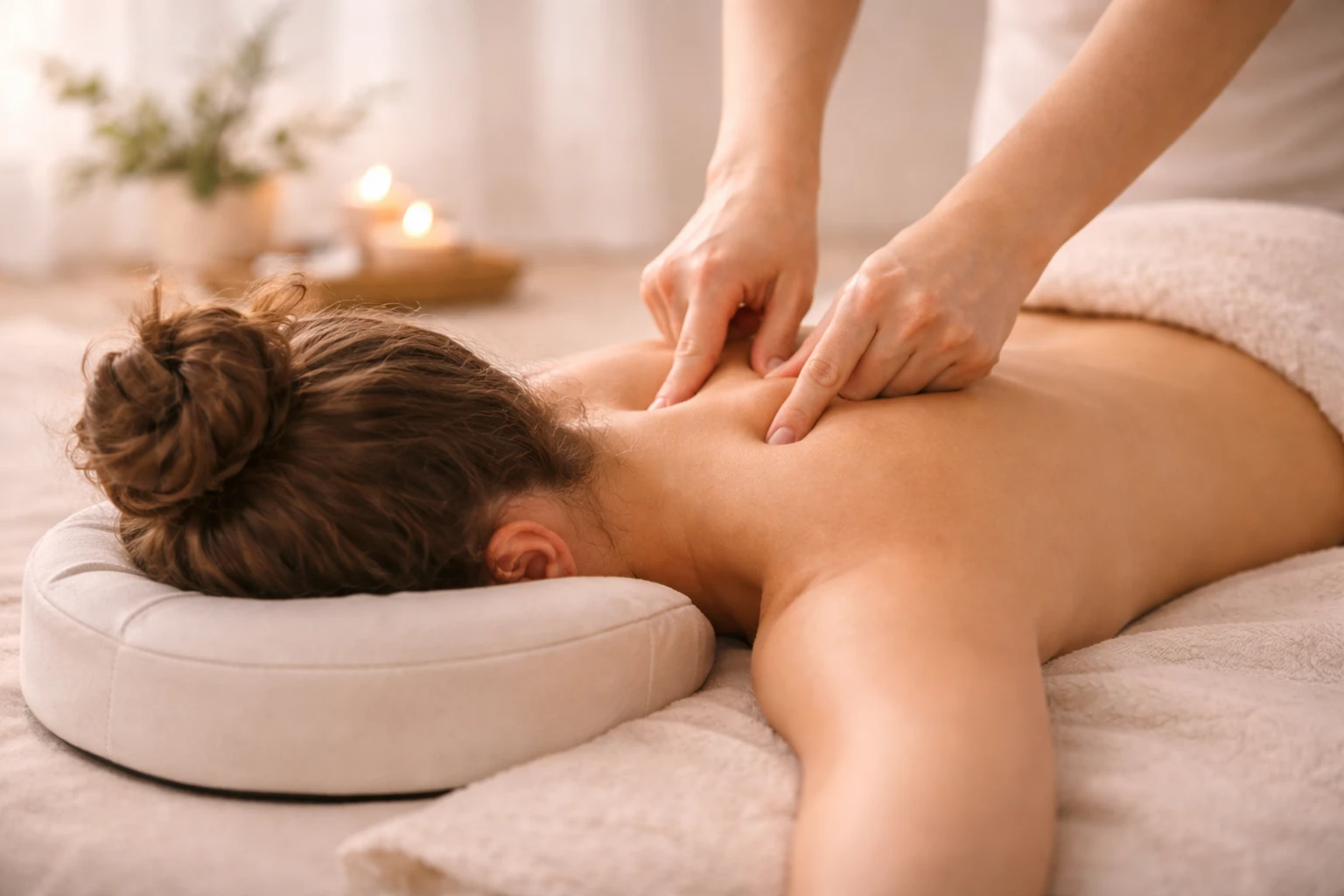
This is not a relaxing oil massage. Tui Na (pronounced twee-nah) is a form of Chinese medical bodywork that translates to "Push & Grasp." It is vigorous, rhythmic, and highly effective at addressing structural misalignments.
At Brooklyn Qi, I integrate Tui Na with modern myofascial release. It is said that, while acupuncture treats the "software" (nerves and energy), bodywork treats the "hardware" (muscles, fascia, and joints). Used together, and in conjunction with cupping and yoga, they provide a comprehensive solution for chronic pain.
How We Work.
- Tui Na: Uses oscillating pressure, rolling, and stretching techniques to open joints and stimulate the flow of Qi in the meridians.
- Myofascial Release: Slow, sustained pressure to release the connective tissue (fascia) that wraps every muscle. This "un-glues" stuck tissues that restrict movement.
- Guasha & Cupping: Tools used to scrape or suction the skin, bringing blood flow to stagnant areas and breaking up scar tissue.
Returning to the Body.
Chronic pain often causes us to dissociate from our bodies. My bodywork sessions are a form of "Somatic Re-education." By bringing intense but therapeutic sensation to an area, we force the brain to re-map that body part—shifting it from a place of pain to a place of sensation. This is critical for breaking the chronic pain cycle.
Serving Park Slope, Windsor Terrace, Carroll Gardens, Cobble Hill, Gowanus, Kensington, Fort Greene, Bedford-Stuyvesant, Bushwick, Sunset Park, Downtown Brooklyn, and neighboring communities in Brooklyn and NYC
Common Questions
What does a Tui Na session feel like?
Tui Na is more active and therapeutic than a relaxation massage. You will feel rhythmic pressure, rolling, and stretching applied to specific muscle groups and joints. Some areas of restriction may feel tender during treatment — this is normal and typically resolves within a day. Most patients leave feeling a significant release in mobility and a reduction in the sense of tightness they came in with.
How is Tui Na different from regular massage?
Standard massage primarily works on circulation and relaxation through broad strokes over the surface of the muscle. Tui Na targets specific anatomical structures — individual muscles, tendons, and fascial planes — using precise techniques designed to release restrictions and restore joint mechanics. It is more clinically targeted and is informed by a functional movement assessment before each session.
What conditions respond well to Tui Na?
Tui Na is particularly effective for frozen shoulder, rotator cuff restrictions, hip flexor tightness, thoracic stiffness from desk posture, IT band syndrome, and any presentation where fascial restriction is limiting range of motion. It is often combined with acupuncture in the same session for a more comprehensive result — acupuncture addresses the neurological and inflammatory components while Tui Na addresses the structural and mechanical ones.
What is gua sha and when is it used?
Gua sha involves firmly scraping the skin with a smooth tool to release fascial adhesions and stimulate blood flow to a stagnant area. It is used when tissue feels dense, ropy, or chronically restricted — common in the upper trapezius, posterior neck, and thoracolumbar region. Like cupping, it leaves temporary marks that reflect the degree of stagnation in the tissue. It is particularly effective for breaking the cycle of chronic muscle tension that does not respond to direct pressure alone.